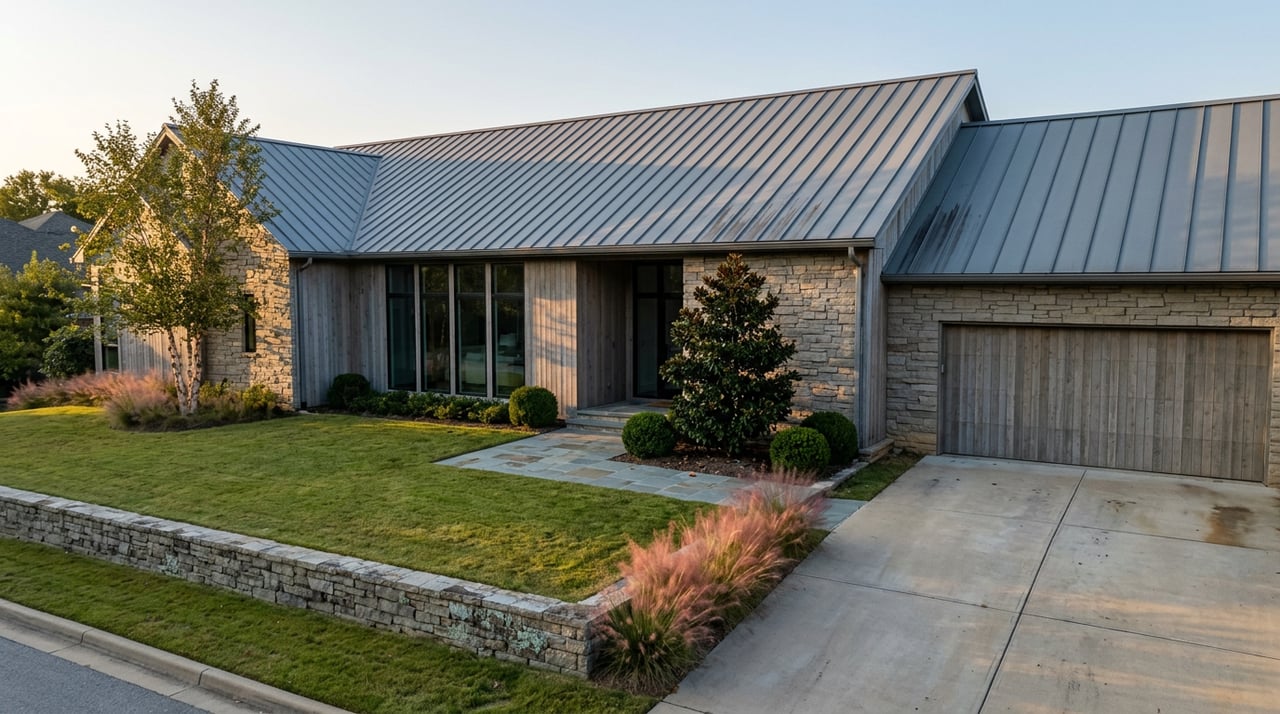
Ask anyone who has shopped for a house in Mauldin why they're looking there, and property taxes come up fast. It's part of the pitch, and it's not wrong. Mauldin routinely shows up with some of the more modest effective tax rates in Greenville County. But here's the part that catches buyers off guard at closing: the number attached to the house you're touring today is not the number you'll be paying next year. In South Carolina, a sale resets the tax math entirely, and the seller's current bill tells you almost nothing about your own.
The mechanism nobody mentions during the walkthrough
Greenville County explains that South Carolina counties reassess real estate every five years, and state law imposes a cap on taxable-value increases at reassessment. That cap is why a homeowner who bought a decade ago in Mauldin can be sitting on a tax bill that looks nothing like current market value would suggest.
That cap disappears the moment a property changes hands. South Carolina calls this an "assessable transfer of interest," or ATI, and Greenville County's own explanation of the rule is refreshingly direct: the county appraises the property to its current market value, generally the sale price, effective as of December 31 of the year the sale closes. The county's public FAQ even walks through a version of this with two otherwise identical houses: one owner bought years earlier and pays a noticeably lower bill, the neighbor who bought more recently pays substantially more, and the entire difference comes down to purchase date, not the house itself.
That's the mechanism buyers in Mauldin need to internalize before they anchor a budget on anything the current owner is paying.
What this means when the neighborhood is marketed on low taxes
Here's where it gets specific to Mauldin. The city's reputation for modest property taxes is built on aggregate numbers, medians and averages pulled from a mix of long-tenured owners riding out old assessments under that 15 percent cap and newer buyers already reassessed at what they paid. When you buy this fall, you're not stepping into the aggregate. You're stepping into a fresh appraisal keyed to your purchase price and the millage rate in effect the year you close.
Two sources tracking Mauldin's effective property tax rate don't even agree with each other, which says something about how much local variation this system produces. One recent estimate puts Mauldin's median effective rate at 0.72 percent, above both the South Carolina state median of 0.66 percent and the reported Greenville County average. Another puts it closer to 0.54 percent. Both can't be the precise number for your specific address, and neither will be, because your bill depends on your own purchase price and the specific millage stack for your exact tax district, not a city-wide median blending decades of purchase dates.
What the current market actually looks like
Complicating things further, Mauldin's own home price data isn't telling one consistent story right now either, and the disagreement is worth sitting with because it shapes what "your purchase price" might actually be this fall.
| Source | Time window | What it measures | Figure |
|---|---|---|---|
| Redfin | January 2026 | Median sale price | $316,000, down 12.6% year over year |
| Movoto | August 2026 | Median list price | $275,000 to $277,000, down 9 to 10% year over year |
| Zillow | mid-2026 | Average home value estimate | $290,836, up 0.3% year over year |
These aren't measuring the same thing. Redfin's number reflects what actually closed in January. Movoto's reflects what sellers are asking for right now, which has been trending down. Zillow's is a modeled estimate across the broader housing stock, which barely moved. None of them is wrong. They're answering different questions, and a buyer who quotes one of them as "the" Mauldin price is making the same mistake as a buyer who assumes the seller's tax bill will become their own. The number depends entirely on what you're measuring and when.
Running the actual numbers
Say you close on a home in Mauldin this fall somewhere in the range these sources describe, call it $290,000. If it's your primary residence, MyMoveCrew says South Carolina taxes owner-occupied homes at a 4 percent assessment ratio, which puts the assessed value at $11,600. Apply the effective rate range found in local data, 0.54 to 0.72 percent of market value, and you land somewhere between roughly $1,566 and $2,088 a year, depending on the exact millage in your specific tax district.
That range is not what the seller has been paying. It's not what Zillow's estimate implies either. It's what your own reassessment, triggered by the sale itself, will produce once Greenville County's assessor processes the deed.
The exemption that doesn't help most buyers, and one that does
Here's a wrinkle worth flagging directly, because it trips people up. South Carolina does offer an exemption tied to ATI reassessment. Buyers sometimes hear about this and assume it will soften their new bill. It won't, if you're buying a primary residence. The South Carolina Code says the 25 percent ATI exemption applies only to property taxed at the 6 percent assessment ratio, meaning investment property, second homes, and most non-owner-occupied real estate. If you're buying to live in the house, you're already at the lower 4 percent ratio, and this particular exemption isn't available to you.
What is available, and worth filing for immediately after closing, is the legal residence application that gets you the 4 percent owner-occupied rate in the first place. It isn't automatic. Greenville County requires proof, and the application needs to be postmarked by January 15 following your purchase. Miss it, and you default to the 6 percent commercial and investment rate on your own home.
If you or a co-owner are 65 or older, legally blind, or permanently disabled, there's also a homestead exemption that removes $50,000 from the home's appraised value before the millage rate is applied. The catch is timing: you need to have been a legal South Carolina resident for a full calendar year before you can apply, so it's not something a first-year buyer can claim immediately.
Where the five-year cycle fits in
Greenville County's last countywide reassessment took effect for the 2025 tax year, with notices mailed out that September. That cycle runs on its own five-year clock and will come around again roughly in 2030, regardless of who owns what property in between. But that cycle is separate from what happens the moment you close on a house. Buying in 2026 doesn't mean you're grandfathered into 2025's countywide numbers. Your specific reassessment happens at the point of sale, independent of the broader five-year schedule, which is exactly why two neighbors on the same street can be looking at meaningfully different bills for reasons that have nothing to do with the houses themselves.
What to do with this before you write an offer
Don't budget off the seller's current tax bill, and don't lean on any single online estimate as the final word either. Ask your agent or closing attorney to pull the actual current millage for the specific tax district your target property sits in, then run that against your anticipated purchase price, not the county's median or a portal's average. File your legal residence application the moment you close, and calendar the January 15 deadline before you forget it in the middle of moving boxes.
If you're weighing Mauldin against other Upstate options and want the tax math run against your actual price range before you write an offer, Ashley Swann has walked enough Greenville County closings to know exactly which questions to ask the assessor's office on your behalf. Let's Connect and get your numbers right before they're locked in.
A few questions worth asking directly
Will my tax bill match what the current owner is paying? No. South Carolina reassesses property at the point of sale, so your bill will be based on your purchase price and the millage rate in effect when you close, not on whatever assessment the seller has been living with.
I'm buying a second home or rental in Mauldin, not a primary residence. Does anything here change? Yes, in one important way. Property taxed at the 6 percent assessment ratio, which covers most non-owner-occupied purchases, may qualify for an exemption after the sale. Greenville County sets January 30 as the deadline to apply for the exemption on transfers made in the prior year.
When does Greenville County reassess again, and should I wait for it? The last countywide reassessment took effect for 2025, with the next one expected on the standard five-year cycle around 2030. Waiting for that cycle won't change anything about your own tax situation if you buy sooner. A sale triggers its own reassessment immediately, independent of the county-wide schedule.
This article is general information, not legal, tax or financial advice. Consult a qualified professional about your situation.